ServicesHardscape Installation
Hardscape Installation in Sanford
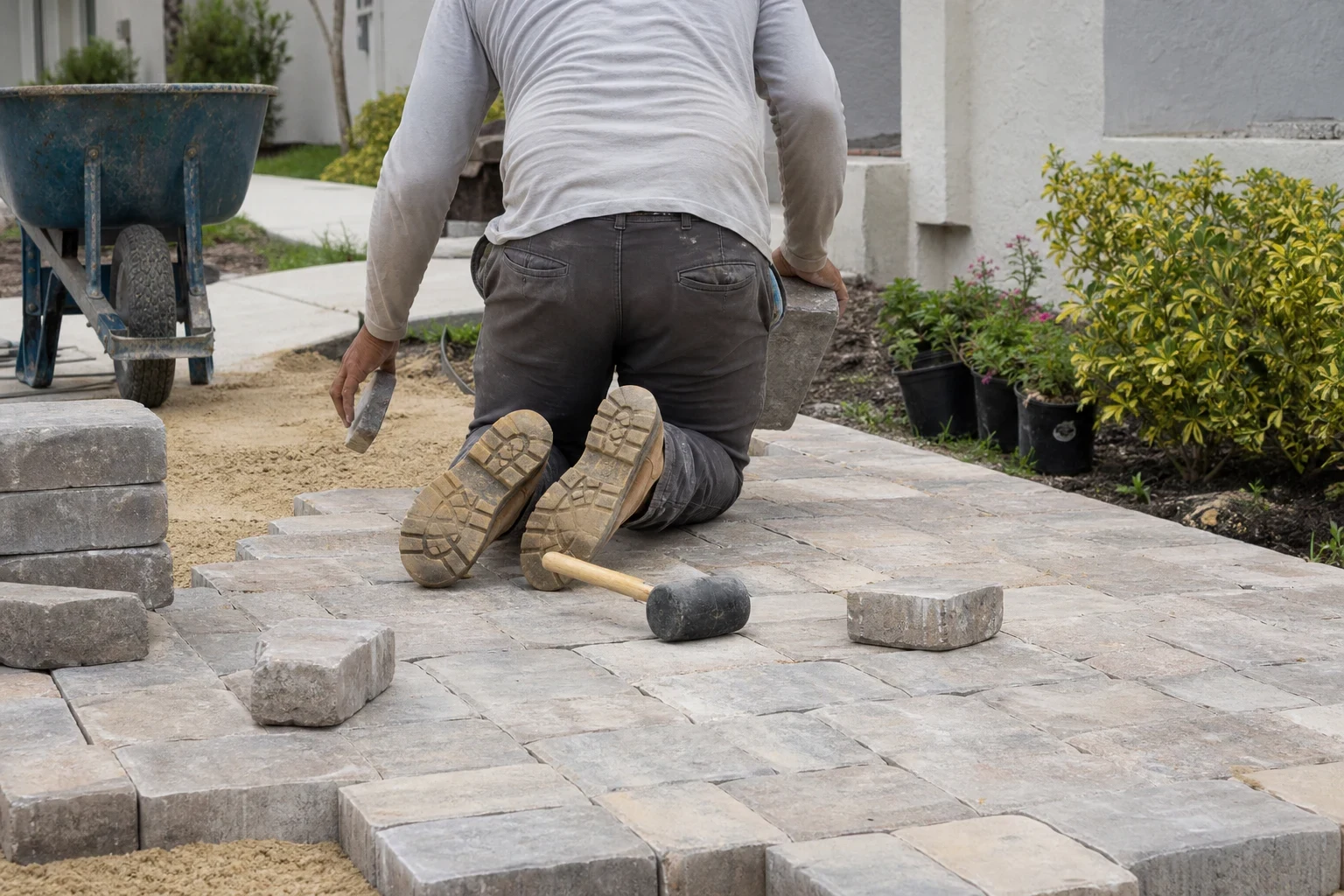
A patio, path or garden wall is only as good as the ground beneath it. Our small crew digs, compacts and sets every piece of your hardscape so it stays level and sheds water, and the same few faces stay on your job from layout to the last swept joint.
Stone and Pavers That Hold Their Shape
Hardscape is the built part of your yard: the patio you sit on, the path from the driveway to the back gate, the edge that keeps a raised bed in place. Done well, it disappears into daily life. Done poorly, it sinks, puddles and grows weeds in every joint within a couple of summers.
Nearly all of that comes down to what sits under the surface. Sandy soil shifts when it gets soaked, and a summer of afternoon storms will find every shortcut in the base. We excavate to the right depth, compact in layers and set edge restraint before the first paver goes down.
Landscaping Sanford has been in business since 2018. We keep our crews small on purpose, and the people who measure your yard are the people who build it.
What We Build
- Paver patios
- Concrete pavers or travertine, laid in the pattern you choose over a compacted crushed-stone base. We slope the surface gently away from your home so rain runs off instead of pooling near the foundation.
- Walkways and garden paths
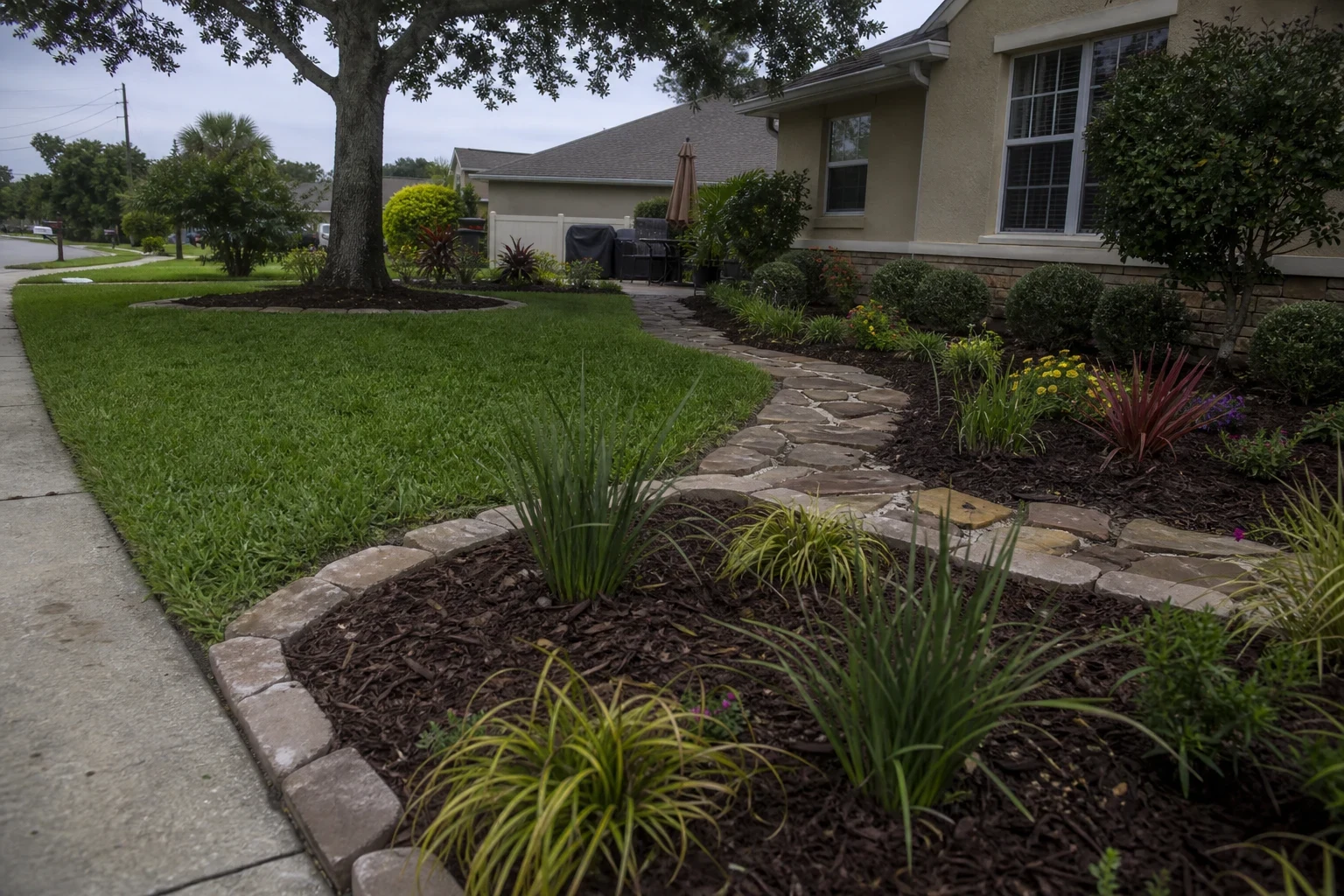
- Paths sized for how you actually walk them, with curves that meet doors and gates cleanly. Joints are filled with polymeric sand to slow weeds and ants.
- Fire pit and seating areas
- A level pad with a built-in or block fire pit and room for chairs, kept a sensible distance from the house and overhanging trees.
- Low retaining and garden walls
- Segmental block walls that hold back soil on a grade change or frame a raised planting bed, with drainage gravel behind them so water does not push them over time.
- Borders and edging
- Paver or stone borders that give lawn and beds a crisp line. They pair well with our mulch and beds work and make mowing edges cleaner.
Signs Your Yard Is Ready for Hardscape
A worn path in the grass
If everyone cuts the same line across the lawn to the gate or the trash cans, the grass will never win. A walkway there solves it for good.
Puddles on an old patio
Standing water after a storm usually means the base has settled or the slope was wrong from the start. Resetting on a proper base fixes the cause, not just the surface.
Pavers that rock or sink
Loose or dipping pavers are a trip hazard and a sign the bedding sand has washed out. We can lift, rebuild the base and relay, often reusing the original pavers.
Soil washing off a slope
Mulch and dirt sliding onto your walk after every rain point to a grade that needs holding. A low wall with drainage behind it keeps the soil where it belongs.
A yard you do not use
Sometimes the sign is simply that there is nowhere comfortable to sit outside. A modest patio can change how often you step out the back door.
What Shapes the Cost
Every hardscape estimate starts with the square footage, but the size alone rarely tells the full story. Material, the condition of the ground and how easily we can reach the work all play a part. We explain each line so you can adjust the plan before anything is built. If a bigger project makes sense to spread out, financing is available for amounts up to $100,000, with terms anywhere from 2 to 12 years and no penalty for paying it off early.
Size and shape
Larger areas cost more overall, and curves, steps and multiple levels add cutting and labor compared with a simple rectangle.
Material choice
Standard concrete pavers, larger-format pavers and natural travertine each sit at different points, as do wall block styles and caps.
Site preparation
Removing an old slab, grading a slope or hauling off extra soil adds time before the base work even starts.
Access
A wide side gate lets us bring in a small machine. Tight access means more hand work and wheelbarrow trips.
Drainage needs
Low spots may need added slope, a dry well or drain pipe to keep water moving away from your home.
How a Hardscape Project Runs
- 1
Walkthrough and free estimate
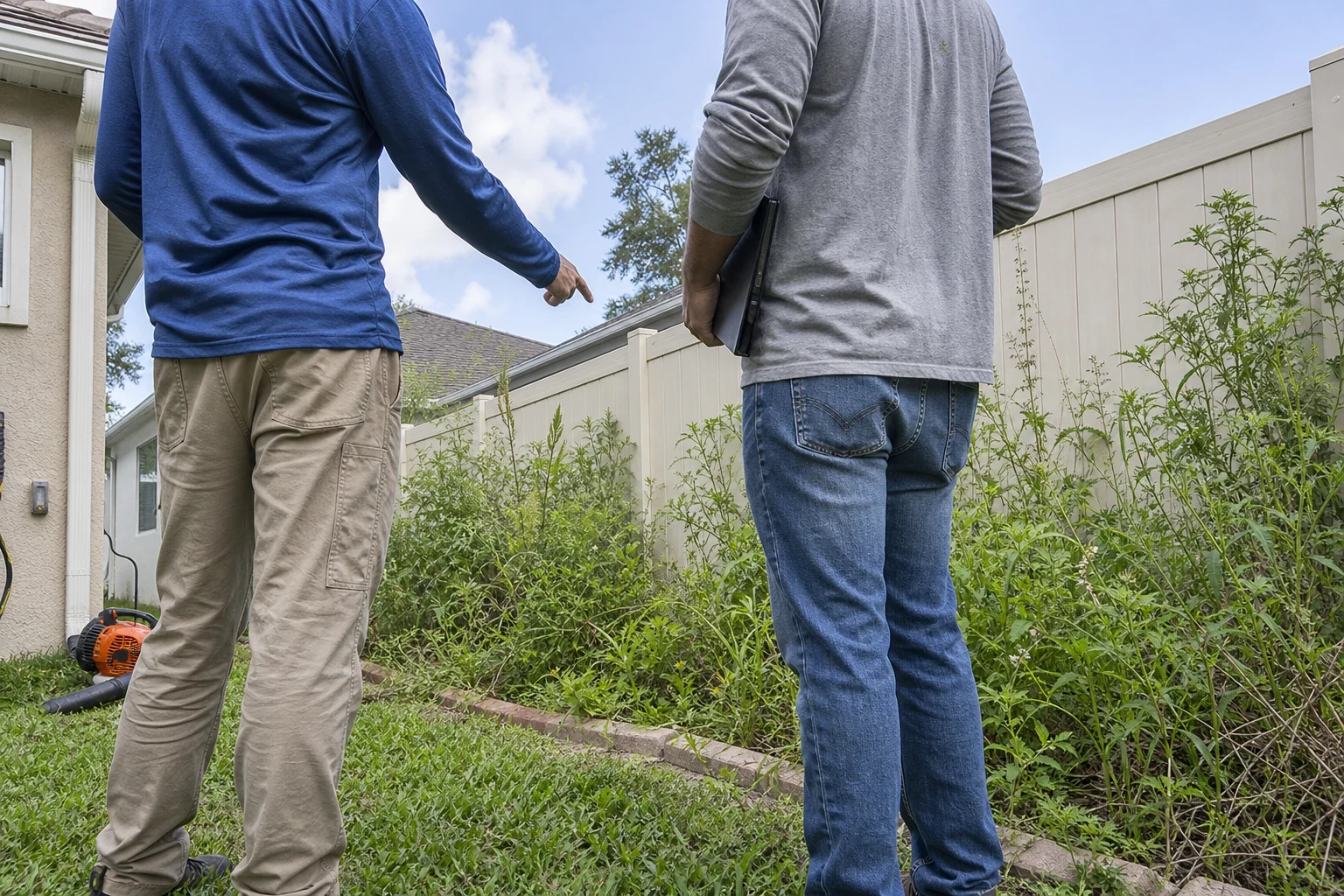
We walk the space with you, measure, check drainage and talk through materials and patterns. You get a written estimate with each part of the work listed.
- 2
Layout and utility check
Before digging, we have underground utilities marked and paint the outline on the ground so you can see the size in place. If your project needs a permit, we pull it.
- 3
Excavation and base
We dig to depth, lay geotextile fabric where the soil calls for it and compact crushed stone in layers with a plate compactor. This is the slowest step and the one that matters most.
- 4
Setting and finishing
Pavers are laid, cut cleanly at the edges, locked in with edge restraint and swept with polymeric sand, then misted to set the joints.
- 5
Cleanup and walk-off
We haul away excavated soil and offcuts, rinse the surface and walk the finished work with you. Our crew is business licensed and fully insured, and we protect lawn and beds along the access route.
Hardscape Questions
Should I choose pavers or a poured concrete patio?
We work with pavers because they flex with the ground instead of cracking, and a single damaged piece can be lifted and replaced. They also give you far more choice in color and pattern. For most patios and walks around your home, pavers are the longer-lasting option.
How long does a typical patio take?
A modest patio usually takes a few working days once materials arrive, with base preparation taking the most time. Heavy rain can pause work, since we will not compact a soaked base. We give you a realistic schedule at the estimate.
Will the work damage my lawn?
Some disturbance along the access path is unavoidable, but we lay down protection where equipment travels and keep the work area tidy each day. If any grass is worn through, we can talk about patching it with our sod installation service.
Do pavers get weeds between them?
Polymeric sand hardens in the joints and greatly reduces weeds and ants, though no joint is fully weed-proof forever. Topping up the sand every few years keeps it working well.
Can you work hardscape into a larger yard plan?
Yes. Many patios and paths start as part of our landscape design work, so planting, irrigation and stonework fit together from the start. We can also add hardscape to a yard that is already planted.
Let's Look at Your Space Together
We'll walk your yard, measure and talk through materials with no pressure. You'll get a clear written estimate built by the crew who would do the work.