ServicesIrrigation
Irrigation Service in Sanford
Your lawn and beds should get even water with nothing wasted. We fix, tune and build sprinkler systems, and the same few people who check your zones carry out the work. Before anything changes, we show you what we found and why it matters.
Watering that matches the yard you actually have
Most sprinkler systems are not broken outright. They drift. A head gets knocked out of line by a mower, a shrub grows over a spray nozzle, a zone that once watered sod now soaks a mulch bed. The result is a lawn with dry crescents and soggy corners, and a water bill that keeps climbing.
Our irrigation work covers both sides of that: finding and fixing what has gone wrong, and building new zones or whole systems when the layout no longer fits your landscape. Central Florida's sandy soil drains fast, so how long and how often each zone runs matters as much as where the water lands.
We are business licensed and fully insured, and we have been doing this work for homeowners since 2018.
What our irrigation service covers
- Zone-by-zone inspection
- We run every zone with you or for you, watching each head for pressure, arc and reach. You get a short list of what is working, what is not and what we would leave alone.
- Head, nozzle and valve repair
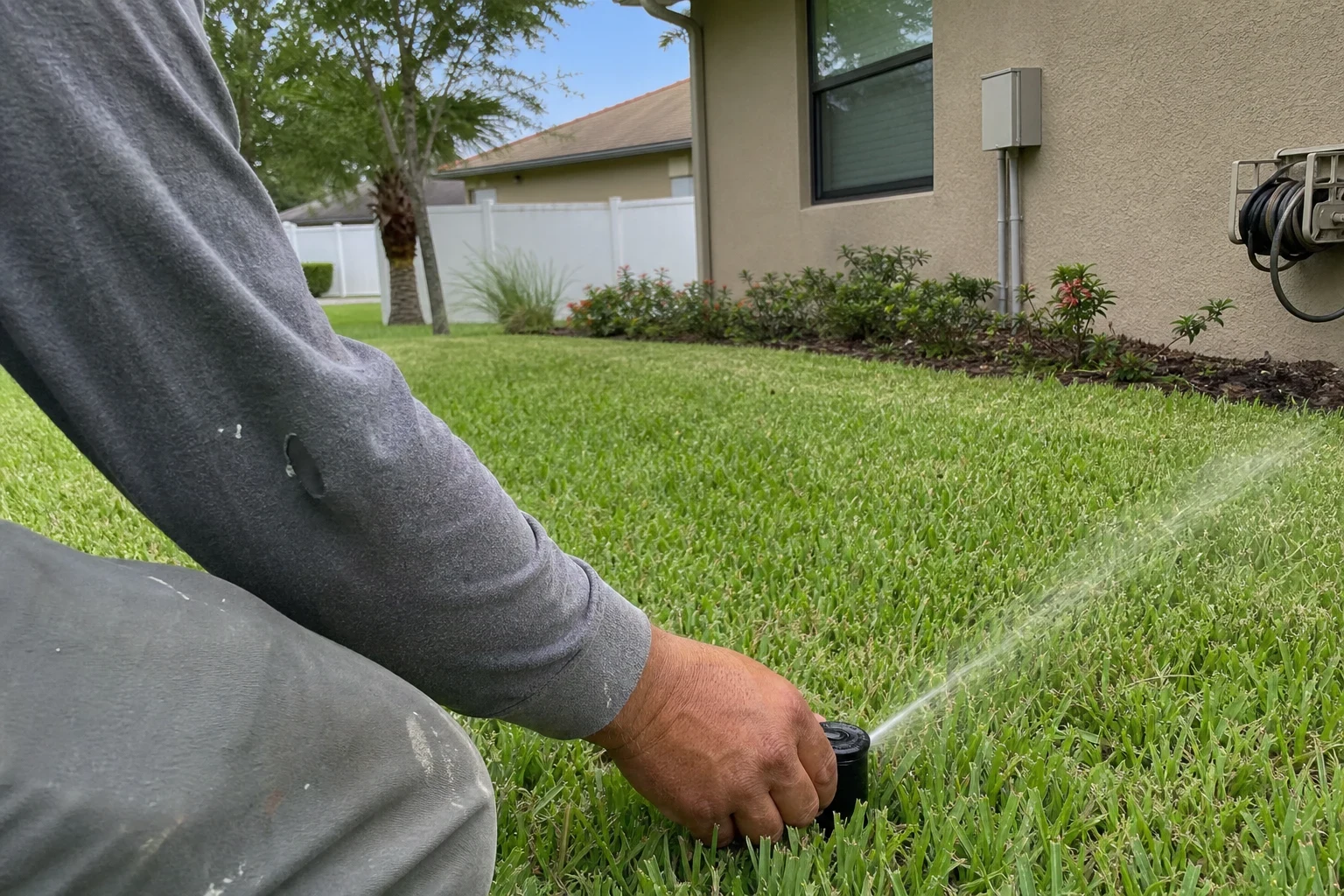
- Broken rotors, clogged spray nozzles, sunken heads and sticking valves are the usual culprits. We replace parts with matched nozzles so a zone puts down water at an even rate.
- Controller and rain sensor setup
- We set run times to the season and to your watering days under the water management district rules. Florida requires a working rain sensor on automatic systems, so we test yours and replace it if it has failed.
- Leak and line repair
- Wet spots that never dry, low pressure on one zone or a sudden jump in usage usually point to a cracked line or fitting. We dig carefully, repair the pipe and set the turf back in place.
- New zones and full systems
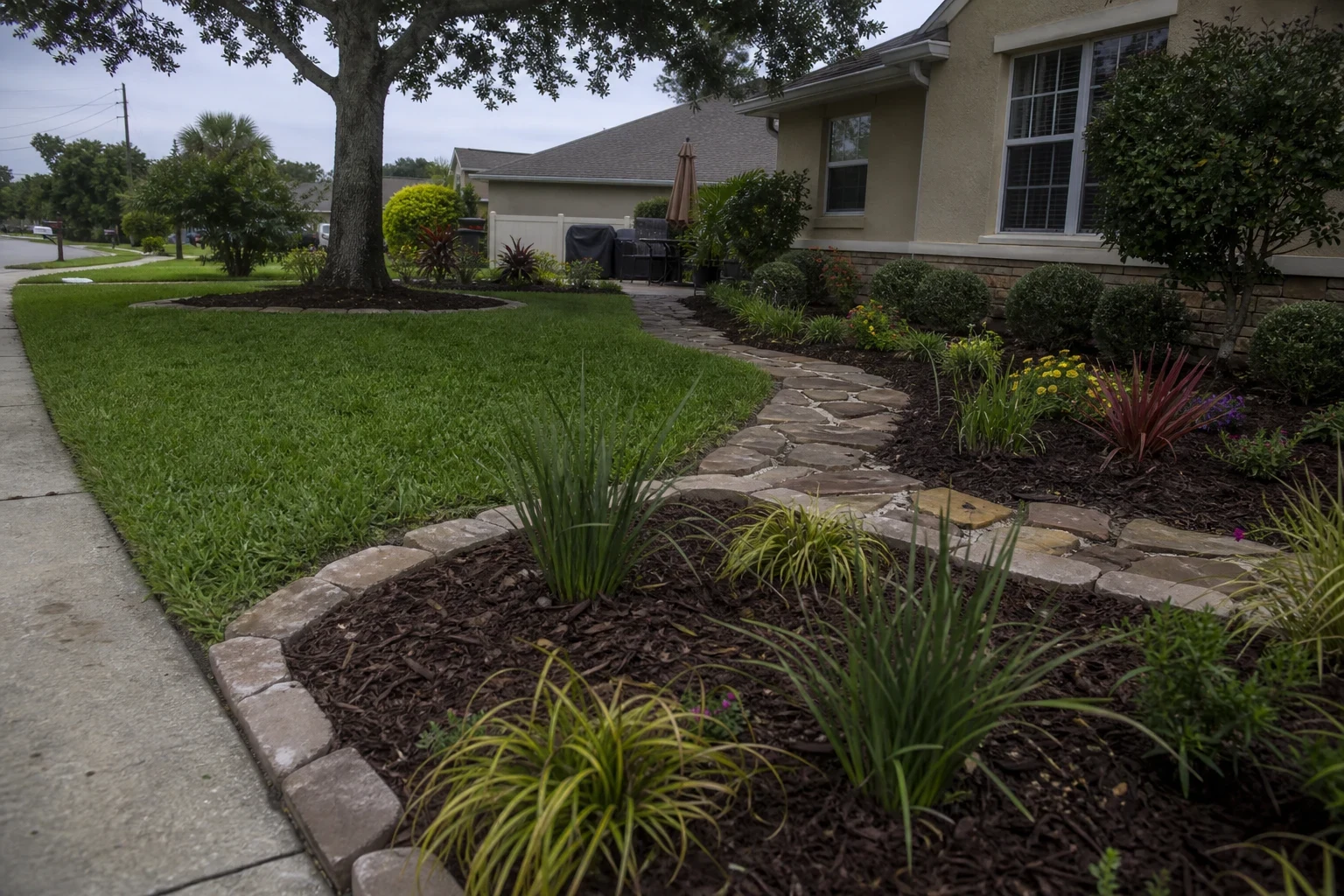
- When you add beds, lay new sod or redo the yard through our landscape design work, we plan zones around plant type. Turf, shrubs and drip-fed beds each get their own circuit.
Signs your sprinkler system needs attention
Brown patches in a green lawn
Dry spots in a regular shape, often near the edges or between heads, usually mean a head is blocked, tilted or no longer reaching its neighbor.
Puddles and runoff
Water sheeting onto the driveway or pooling in low spots means a zone runs too long, a head is misaimed or a line is leaking underground.
Sprinklers running in the rain
If the system comes on during a summer downpour, the rain sensor has likely failed or was never connected.
A higher water bill with no change in habits
Steady increases often trace back to a hidden leak or a valve that does not fully close between cycles.
Beds that stay wet while turf dries out
Shrubs and lawn grass need different amounts of water. When they share a zone, one of them always loses.
How an irrigation visit goes
- 1
Phone call and walkthrough
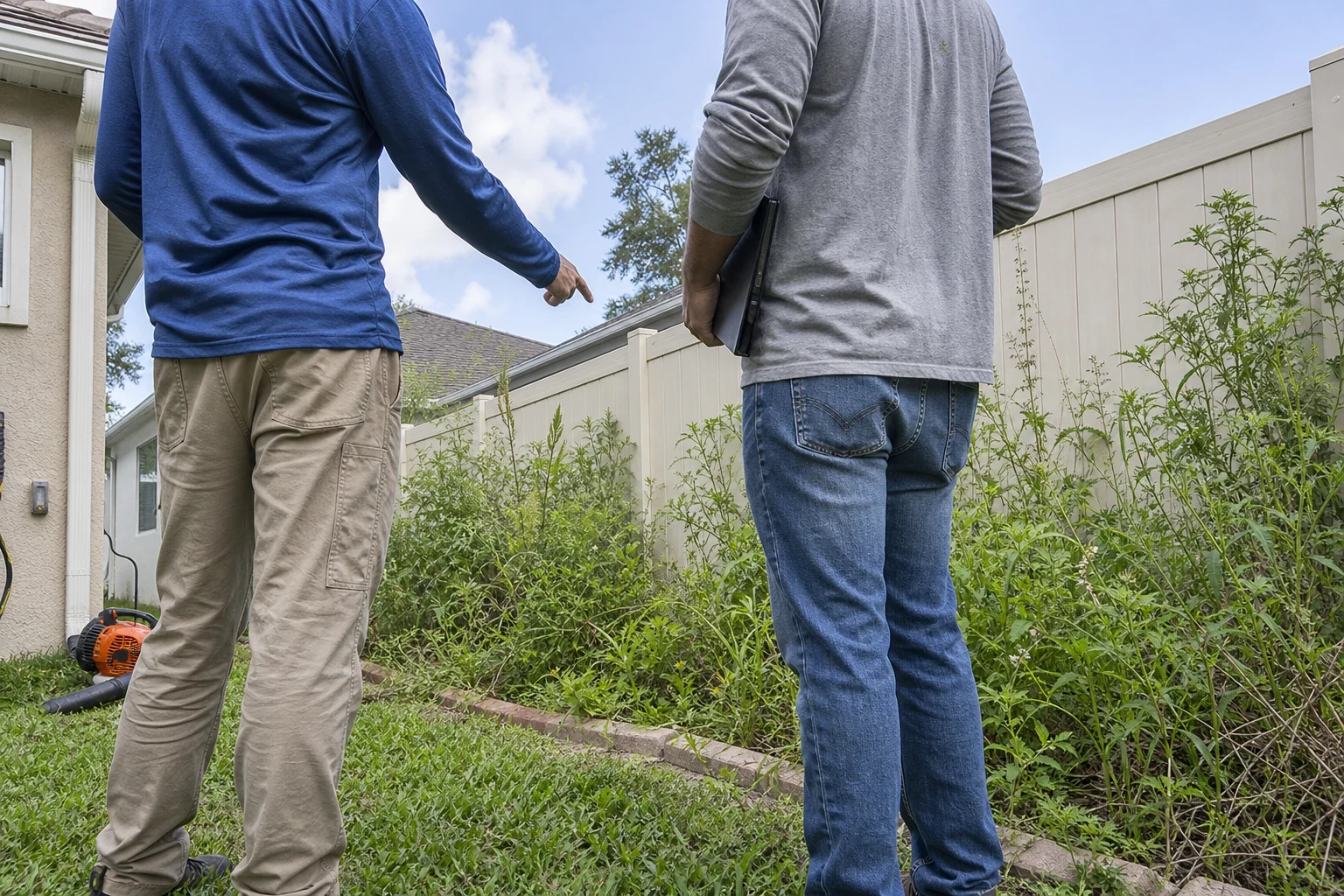
You tell us what you are seeing, and we set a time for an on-site walkthrough. It is free, and you are welcome to walk the zones with us.
- 2
Written findings and estimate
We list each problem by zone, with the parts and labor to fix it. If a repair is not worth making on an older system, we say so and explain the alternative.
- 3
The work day
The same people who inspected your system come back to do the work. We cut turf cleanly, set it aside, and lay it back once lines and heads are in. If the job needs a permit, we pull it.
- 4
Final run and handover
We run every zone again, adjust arcs and reset the controller. Before we leave you get a quick explanation of your schedule and how to pause it.
What shapes the cost of irrigation work
Swapping one clogged nozzle and laying out a new multi-zone system are very different jobs, so the price comes from what we see on the walkthrough. Each item appears on its own line in your estimate. If a new system or a large rebuild is more than you want to pay at once, financing can spread it out: amounts as high as $100,000, repayment terms anywhere from 2 to 12 years, and no prepayment penalties should you clear the balance sooner.
- How many zones and heads
- Each added zone brings its own valve, wiring and set of heads to place and tune.
- Repair or replace
- Fixing a few parts costs far less than rebuilding, but a system with brittle pipe and failing valves throughout may be cheaper to replace than to chase leak by leak.
- Digging and access
- Lines under mature beds, tree roots or hardscape take more care to reach than lines under open lawn.
- Equipment choices
- Controller type, drip versus spray in beds, and rain sensor model all change the parts list. We explain the tradeoffs rather than defaulting to the most expensive option.
Irrigation questions we hear often
Something not covered here? (407) 305-3430
How long should each zone run?
It depends on the head type and what the zone waters. Rotors put down water slowly and often need longer runs than spray heads. In sandy soil we usually prefer fewer, deeper waterings over short daily ones, within your allowed watering days.
Can you work on a system someone else installed?
Yes. Most of the systems we repair were put in by a builder or a previous owner. We map the zones as we go and leave you with a note of which valve controls what.
Do I need to be home for the visit?
Not necessarily. We need access to the controller and the yard, and we will go over what we found by phone afterward. Many homeowners like to walk the first inspection with us, which helps.
Should my flower beds be on drip instead of spray?
Often, yes. Drip puts water at the roots, keeps foliage dry and wastes less to wind and overspray. It works well for shrubs and mulched beds, while spray and rotors remain the better fit for lawn.
Do you handle the lawn and beds too?
We do. Irrigation work often pairs with sod installation, mulch and beds, or regular lawn care, and having one crew on all of it means the watering is set for the plants we put in.
Let us walk your zones with you
One visit tells us where the water is going and where it is not. We will explain what we see in plain terms and give you a written estimate before any work begins.