ServicesMulch and Beds
Mulch and Bed Care in Sanford
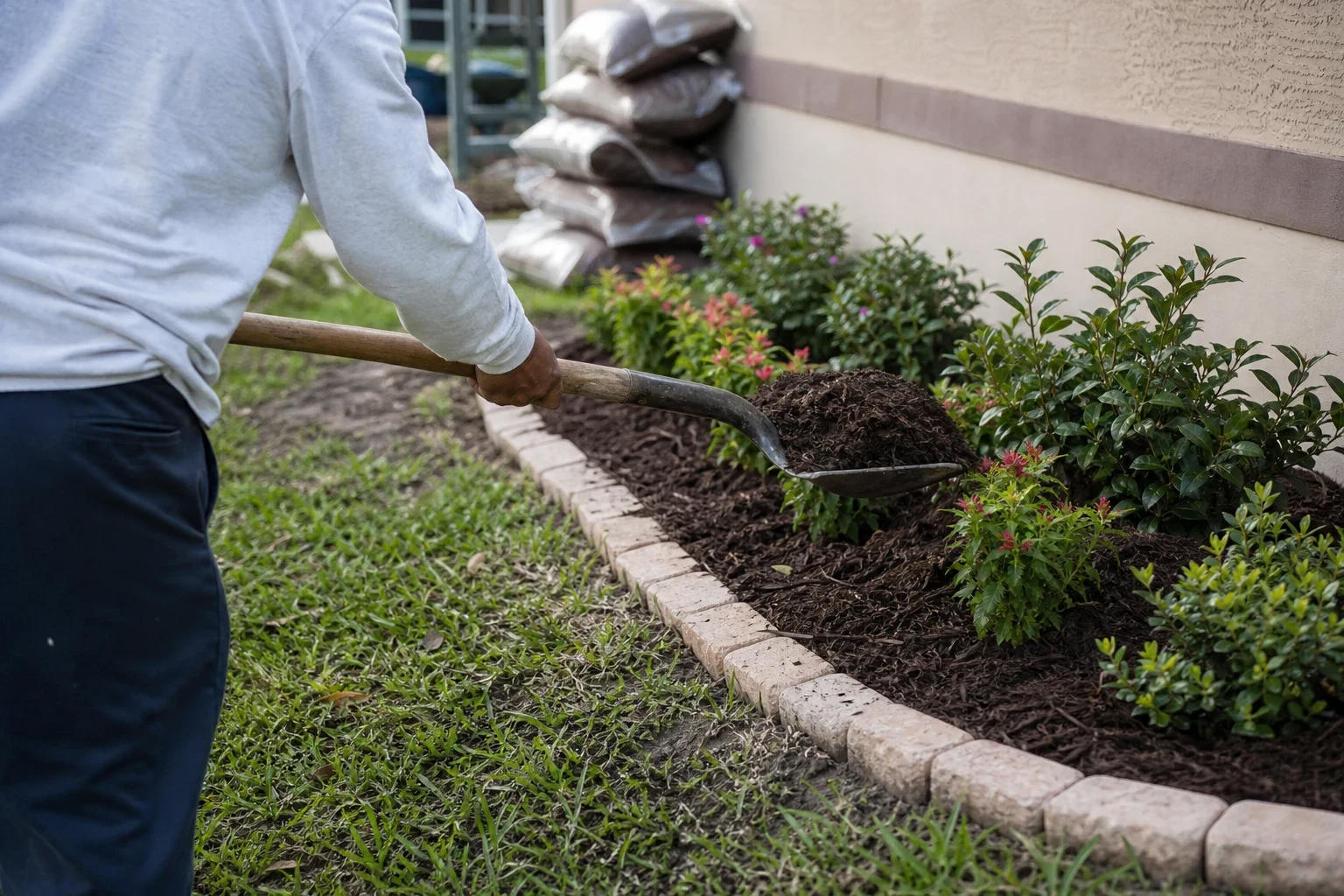
We clear out weeds, cut clean edges and lay fresh mulch at a depth that protects roots and holds moisture. The same few people who walk your beds with you are the ones who do the work, so nothing gets lost between the estimate and the finish.
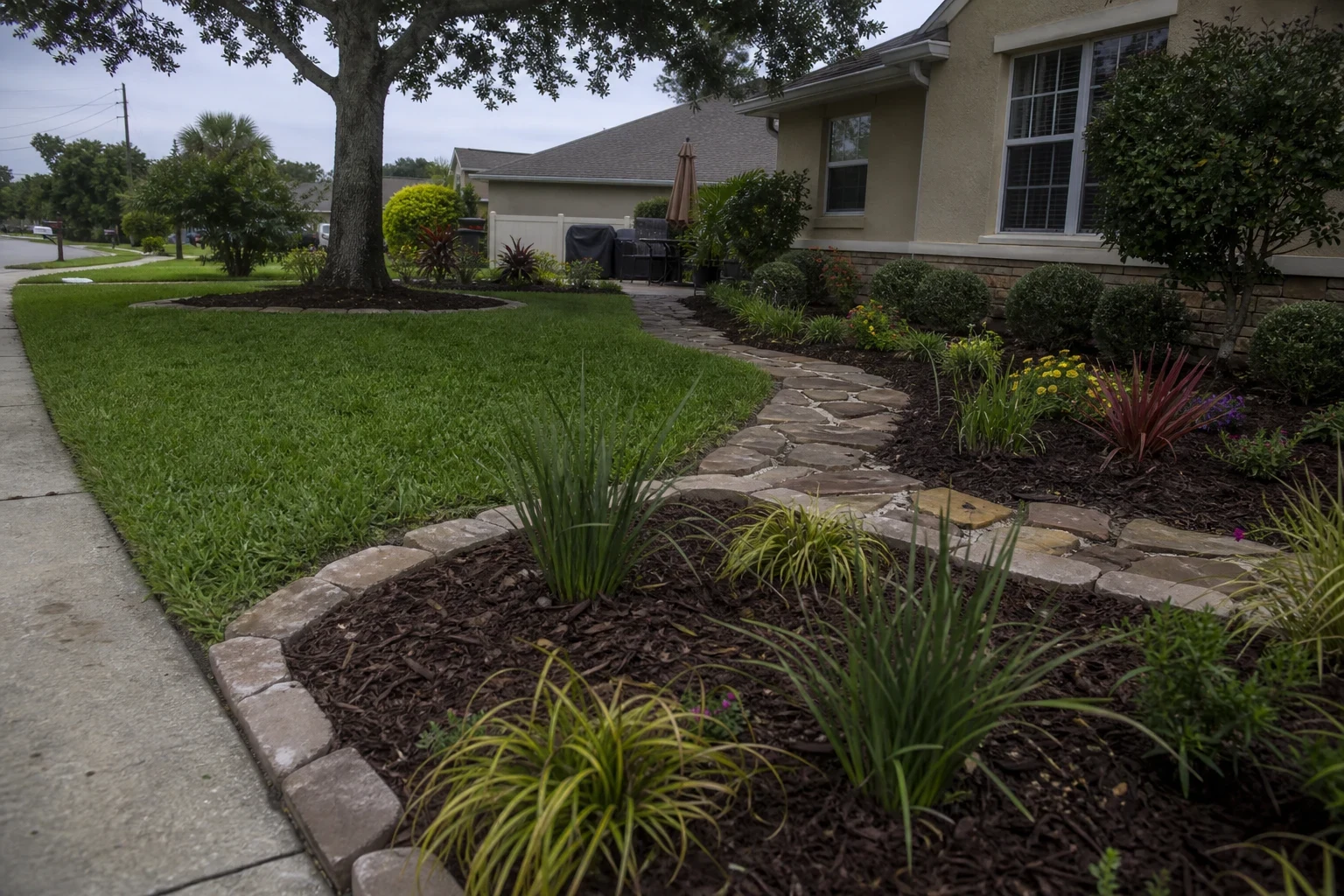
Beds that look finished and stay that way
Good bed work is mostly preparation. Weeds come out by the root, old mulch that has matted into a crust gets broken up or removed, and the edge is cut so grass has a harder time creeping in. Only then does new mulch go down, spread evenly and kept back from trunks and stems.
Mulch is the right call when beds look tired, weeds are winning, or soil is drying out between waterings. In our sandy soil and long summers, a proper layer keeps roots cooler and slows evaporation, which means your plants ask less of your irrigation. If the beds themselves need rethinking, our landscape design work is the better starting point.
We are a small crew, business licensed and fully insured, and we have been doing this work since 2018. You will see the same faces from the first walk-through to the final rake.

What a bed refresh includes
- 01
Hand weeding by the root
We pull weeds rather than mowing them off at the soil line. Dollarweed and nutsedge come back fast if the root stays, so we take the time to get it.
- 02
Crisp bed edges
We recut the line between lawn and bed with a clean vertical edge. It keeps mulch in and slows St. Augustine runners from wandering into your plantings.
- 03
Old mulch handled properly
Mulch that has packed into a water-shedding mat gets loosened or hauled away. Piling new material on top of a crust just builds a layer that rain runs off.
- 04
Your choice of material
We lay pine straw, pine bark, cypress or hardwood blends, and we will tell you how each one behaves. Pine straw knits together and stays put on slopes, while small bark nuggets can float in a heavy downpour.
- 05
Correct depth and spacing
We spread to roughly two to three inches and keep mulch pulled back from trunks and stems. Piling it up against bark invites rot and pests.
- 06
Cleanup before we leave
Walks, drives and patios get blown off, and bags and debris leave with us.
Questions about Mulch and Beds?
Call(407) 305-3430Signs your beds are ready for attention
You can see bare soil
Mulch breaks down over time. Once soil shows through, it dries faster and weeds have an open invitation.
Weeds come back within days
That usually means the roots were never removed, or the mulch layer is too thin to block light.
Grass is growing into the beds
A soft or missing edge lets runners cross over. Left alone, the bed slowly turns into lawn.
Mulch has turned gray and crusty
Faded, matted mulch sheds water instead of letting it through, so your plants get less of every rain and every irrigation cycle.
Mulch is piled against trunks
Mounds around trees and shrubs trap moisture against bark. We pull it back and reset the depth.
How a bed job runs
- 1
Walk the beds together
We visit your home, look at every bed with you and talk through material, color and any plants that are struggling. You get a free estimate that spells out the work and the quantity of mulch.
- 2
Prep the beds
On the day, the crew weeds, removes or loosens old mulch and cuts the edges. Any irrigation heads or drip lines in the beds are flagged so they stay visible and undamaged.
- 3
Lay and shape the mulch
Mulch goes down evenly, feathered at the edges and kept off stems. Most homes are finished in a single visit.
- 4
Final walk and cleanup
We blow off hard surfaces, haul away debris and walk the beds with you if you are home. The person who quoted the job is usually the one who finishes it.
What shapes the price
The estimate depends mostly on how much ground we cover and how much prep it needs before any new mulch goes down. We itemize it so you can see where the cost sits. When bed work is one part of a bigger project, some homeowners choose to spread the cost with our financing, which covers amounts up to $100,000, runs from 2 to 12 years, and carries no penalty for paying it off early.
- Bed size and count
- Square footage sets how much material and time the job takes.
- Weed load and old mulch
- Heavily overgrown beds, or thick layers of old mulch to remove, add prep time.
- Material choice
- Pine straw, pine bark, cypress and hardwood blends differ in price and in how often they need topping up.
- Access
- Beds behind fences or far from where material can be dropped take longer to fill by wheelbarrow.
- Edging work
- A light recut is quick. Reestablishing a lost bed line takes more effort.
Mulch and bed questions
How often should my beds be mulched?
Most beds here need a fresh layer about once or twice a year. Pine straw breaks down faster and usually wants topping up sooner than bark. We will tell you honestly if a light refresh is enough instead of a full redo.
Pine straw or bark, which is better?
Both work well. Pine straw is light, stays put on slopes and lets water through easily. Bark looks more finished and lasts a bit longer, but small nuggets can wash in heavy summer rain, so we lean toward larger pieces or straw in low spots.
Do you put down landscape fabric?
We usually advise against it in planted beds. Mulch breaks down on top of it, weeds root into that layer anyway, and the fabric makes future planting harder. Proper weeding and the right mulch depth tend to do a better job.
Will mulch damage my irrigation?
Not when it is laid with care. We keep spray heads clear and avoid burying drip emitters. If something in the system looks off while we are working, we will point it out, and our irrigation service can take a closer look.
Can you add new plants while you are there?
Yes, simple plant replacements fit naturally into a bed refresh. For a larger change in layout or plant choice, we would start with a landscape design conversation so the beds work together.
Let's look at your beds together
We will walk your property, talk through materials and leave you with a clear, free estimate. The same small crew carries the job through to the last rake stroke.